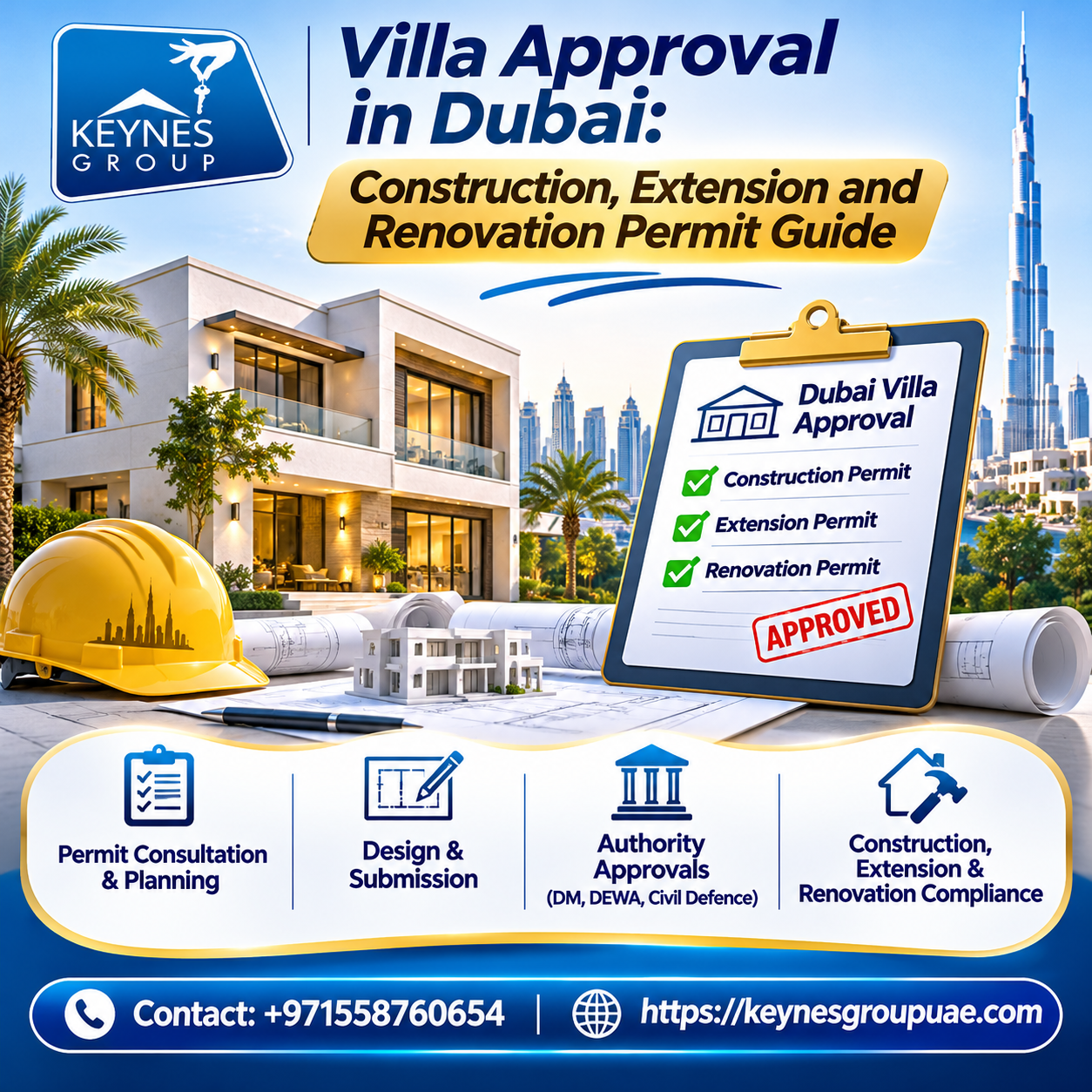
Villa construction, extension and renovation projects in Dubai can require formal approvals before work begins. The correct route depends on the plot location, community rules, the nature of the proposed changes and the authority responsible for the property. A villa owner should establish these points before appointing contractors or ordering construction materials. This guide outlines a practical way to prepare a villa approval package and avoid common coordination gaps.
Identify the villa's authority and community requirements
Start with the title or plot information, affection plan or site plan where applicable, and the name of the master developer or community. A villa in one area may follow a different approval route from a villa in another area. Confirm whether Dubai Municipality, DDA, a free-zone or development authority, or a master developer has a role in reviewing the proposed work.
Check community design guidelines, permitted building parameters, setback requirements, height limits, access restrictions and any controls on external appearance. These details can affect extensions, boundary walls, garages, pergolas, roof works, swimming pools and changes to elevations.
Describe the work precisely
Separate the proposed scope into clear work items: new villa construction, internal alteration, extension, additional room, structural modification, swimming pool, boundary wall, façade change or renovation. A project described only as 'villa renovation' may be too broad for a useful approval review because cosmetic finishes and structural alterations have different implications.
Record existing and proposed floor areas, levels, room uses, structural changes and building-services changes. Existing drawings should be checked against actual site conditions. If the existing property differs from its approved drawings, discuss the discrepancy with the appointed professional before preparing a new submission.
Prepare coordinated villa drawings and supporting documents
A villa submission may require a location or site plan, architectural plans, elevations, sections, structural information, MEP layouts and specialist details according to the proposed work and authority checklist. For an extension, the drawings should make the existing and proposed portions easy to distinguish. For structural changes, the appointed engineer should assess the impact and prepare the necessary technical documents.
Utility or infrastructure clearances may also be relevant. DEWA's published Building No Objection Certificate service explains the electricity and water NOC process for enrolled contractors and consultants seeking a building permit. Check whether the proposed villa work triggers a relevant NOC and use the current official requirements.
Manage submissions and site readiness
Create a submission schedule that identifies who prepares each drawing, who checks it, who submits it and who responds to authority comments. Keep a record of application references and approved revisions. If a drawing changes after submission, ensure the change is reflected consistently in all affected documents.
Do not allow a contractor to treat a quotation, community email or application receipt as a construction permit. Confirm the specific approval required for the work and keep the issued permit and approved drawings accessible to the site team. Any change to the approved scope should be reviewed before it is carried out.
Plan for completion and future property records
At the end of the work, retain approvals, inspection records, completion documents, warranties and updated as-built information where required. These records can be important for maintenance, future alterations, property transactions and later authority submissions.
Owners should also keep written confirmation of any community or master-developer requirements that apply in addition to statutory authority approvals. A clear record helps distinguish community consent from formal permits issued by the competent authority.
Practical preparation checklist
- Confirm the villa plot's authority and master-community requirements.
- Identify whether the work is cosmetic, structural, an extension or a new facility.
- Compare existing site conditions with the latest approved drawings.
- Obtain architectural, structural and MEP inputs appropriate to the scope.
- Check whether DEWA or other NOCs apply.
- Keep a revision-controlled set of submitted and approved drawings.
- Confirm permit issuance before the contractor starts regulated work.
Frequently asked questions
Do I need approval for a villa extension in Dubai?
An extension can change built-up area, setbacks, structure or external appearance, so approval may be required. Confirm the exact requirements with the authority and community responsible for the plot.
Is a community NOC the same as a building permit?
Not necessarily. Community or master-developer consent and statutory permits can be separate requirements. Confirm which approvals apply to your project.
Can I use old villa drawings for a new application?
Only if they accurately represent the property and meet the current submission requirements. Existing drawings should be checked against actual site conditions.
Does a swimming pool need separate approval?
Requirements depend on the plot, authority, design and community rules. Check the current requirements before construction.
Official resources and further reading
- Dubai Municipality – Building Permit Procedures
- Dubai Municipality – Services
- DEWA – Building No Objection Certificate
- DDA – Construction Permits and NOCs
How Keynes Group can support your project
Planning an approval submission is easier when the project team understands the applicable authority, required drawings, supporting documents and review sequence before filing. Keynes Group UAE provides approval-related coordination and project support in Dubai. Discuss your project scope, plot or community, proposed work and current drawing status with the team so that the appropriate route can be reviewed. Service scope and authority requirements depend on the project and the competent authority; approval decisions remain with the relevant authority. Visit Regulatory Approvals & Permits or Keynes Group UAE to make an enquiry.
Editorial note: Authority procedures, forms, fees, submission channels and technical requirements can change. Confirm the latest requirements directly with the competent authority before preparing or submitting an application. This article is general information, not legal or engineering advice.